

How Electric Cars Work: Complete Guide to EVs in 2026
What Is an Electric Vehicle?
An electric vehicle (EV) runs entirely on electricity stored in a battery pack instead of burning gasoline. You charge it by plugging into a power outlet — just like your phone, but with much more power. No combustion engine, no transmission, no exhaust pipe, and no gas station visits.
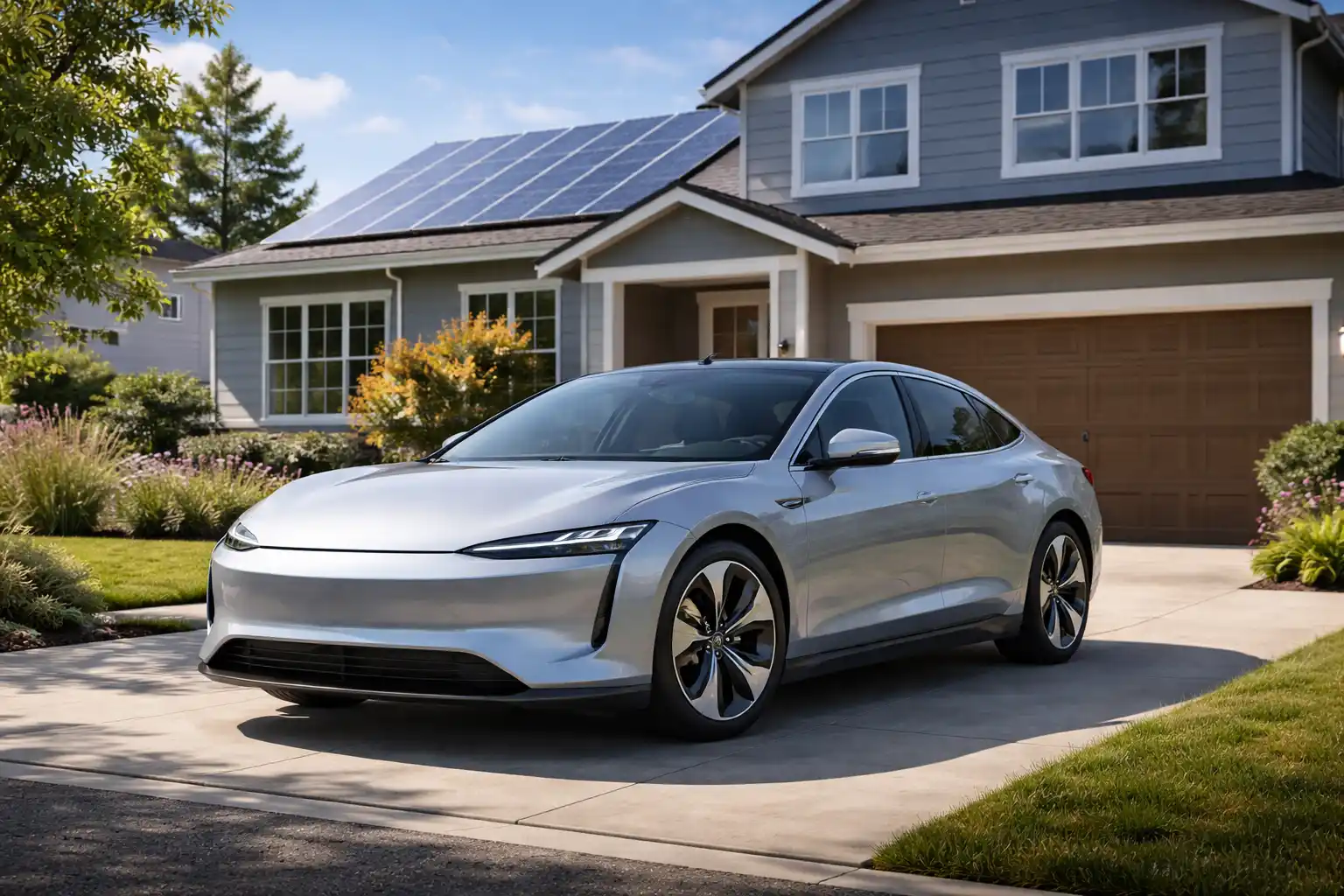
The difference is more significant than it sounds. Electric motors deliver instant torque from 0 RPM — meaning faster acceleration than most gas cars at any price point. The Tesla Model 3 Performance does 0–60 mph in 3.1 seconds. Even economy EVs like the Chevy Bolt feel snappier than comparable gas cars.
Modern EVs travel 200–350 miles per charge — more than enough for 95% of daily driving. When you need more range for road trips, DC fast chargers add 100–200 miles in 20–45 minutes.
How Do Electric Cars Work?
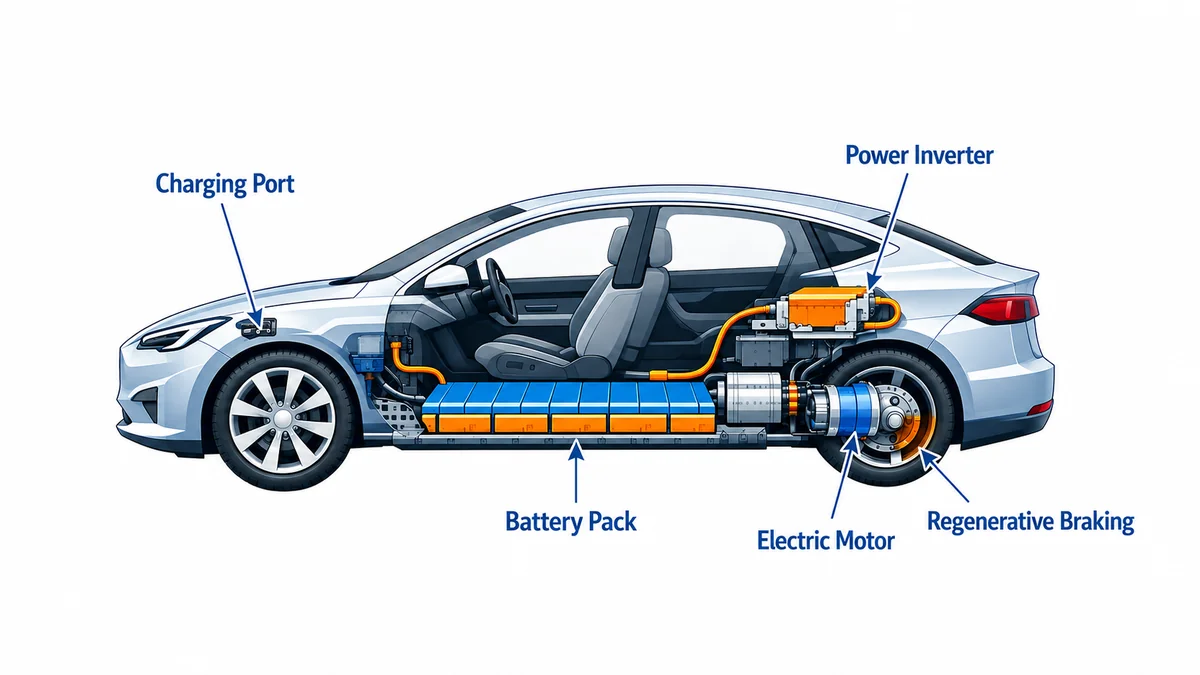
Unlike a gas engine with thousands of moving parts, an EV drivetrain is elegantly simple — a battery pack, a power inverter, and an electric motor. Here's how each piece works together.
The Battery Pack
The battery pack — typically mounted flat under the floor for a low center of gravity — stores the energy that powers the vehicle. Most 2026 EVs use lithium-ion cells grouped into modules, providing 50–100+ kWh of capacity. The battery management system monitors temperature, charge level, and cell balance in real time to maximize lifespan and performance.
The battery pack feeds electricity through power electronics to the electric motor. Unlike gas engines that operate in a narrow RPM range and need complex transmissions to stay in that range, electric motors deliver maximum torque instantly across their entire operating range — no gear shifting needed.
The Electric Motor
Electric motors convert 85–90% of electrical energy into motion. Gas engines manage just 20–30% — the rest is lost as heat through the exhaust and cooling system. This efficiency difference is why EVs cost dramatically less per mile to operate.
Electric motors have about 20 moving parts. A traditional gasoline engine and automatic transmission combined have over 2,000 moving parts. Fewer parts means fewer things to break — and dramatically lower maintenance costs over time.
Regenerative Braking
When you lift off the accelerator in an EV, the motor reverses function and becomes a generator, converting your vehicle's kinetic energy back into electricity stored in the battery. This "regenerative braking" recovers 60–70% of energy that would otherwise be lost as heat in traditional brakes.
Types of Electric Vehicles
"Electric vehicle" is really an umbrella term for three different setups. A BEV runs purely on a battery and motor — there's no gas engine at all. A PHEV pairs a smaller plug-in battery with a gas engine, so it can drive short trips on electricity and switch to gas when the battery runs low. A HEV also combines a battery and gas engine, but the battery is small and only recharges on its own — you never plug it in. The table below lays out how those differences play out in practice.
| BEV | PHEV | HEV | |
|---|---|---|---|
| Gas engine | None | Yes — backup | Yes — primary |
| Plugs in to charge | Yes | Yes | No |
| Range (total) | 200–350 mi | 400–600 mi | 500–650 mi |
| Emissions | Zero | Only on gas | Yes |
| Examples | Tesla Model Y, Model 3 | RAV4 Prime, Wrangler 4xe | Prius, Camry Hybrid |
| Best for | Home charging, <200 mi/day drivers | Occasional long trips, not ready for full EV | Better MPG, zero behavior change |
EV Charging: Everything You Need to Know
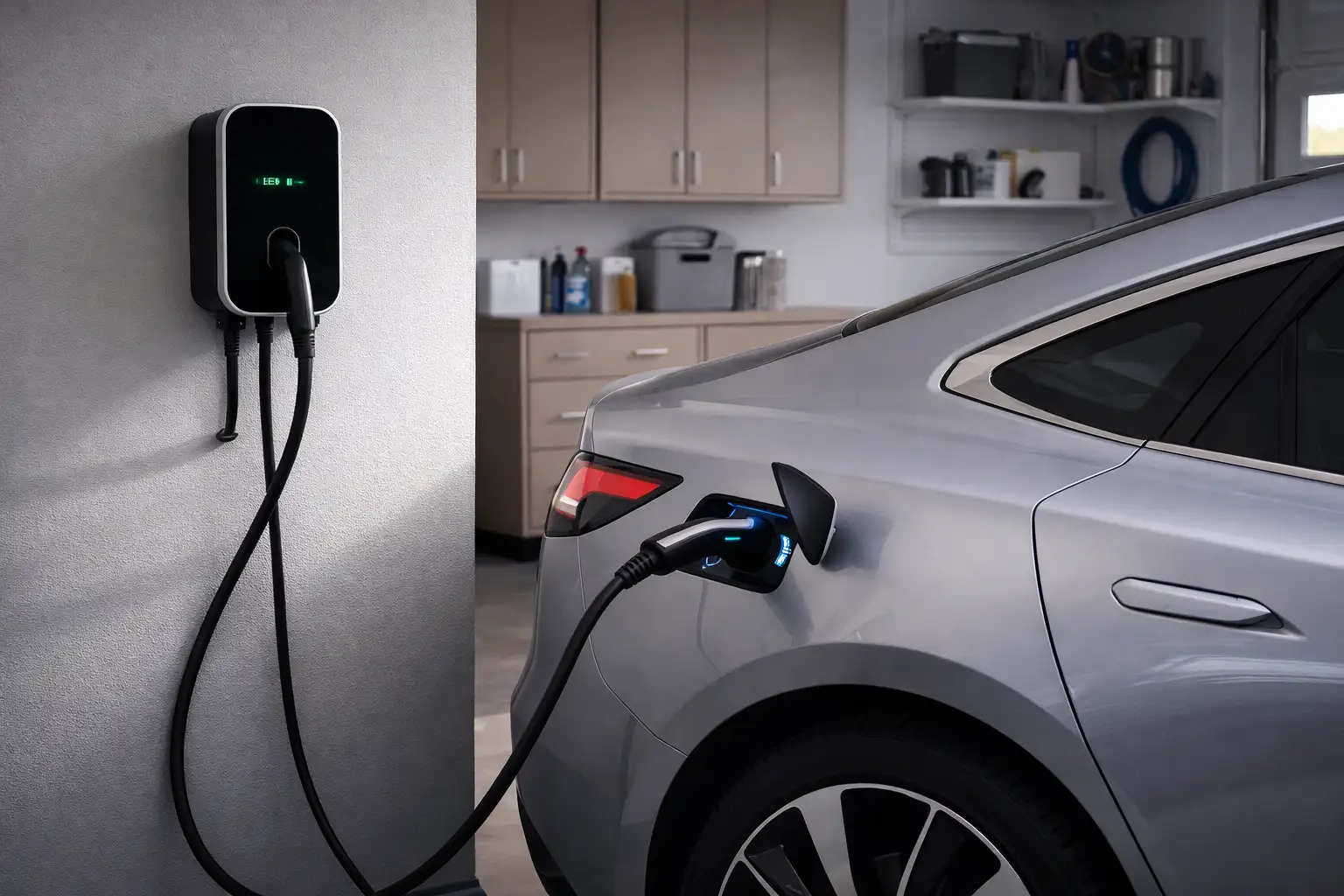
Most EV owners do 90% of their charging at home overnight — you wake up to a full battery every morning. Public charging handles the rest for road trips and longer days.
Level 1 Charging — Standard 120V Outlet
Plug your EV into any standard household outlet. No equipment purchase needed — the cable comes with the car. Adds 3–5 miles of range per hour. Best for PHEVs (smaller batteries) and occasional top-ups for BEVs. Too slow for daily full charging of a pure EV with a large battery.
Level 2 Charging — Home Wall Charger
A 240V Level 2 charger adds 20–30 miles of range per hour — enough to fully charge most EVs overnight. This is what the vast majority of EV owners install at home. Popular options: Tesla Wall Connector ($475), ChargePoint Home Flex ($699), Grizzl-E Classic ($399). Installation typically runs $800–$1,500 for a quality unit plus professional electrical work.
DC Fast Charging — Public Highway Charging
High-power DC fast chargers (50–350 kW) add 100–200+ miles in 20–45 minutes. Found at highway rest stops, shopping centers, and dedicated charging stations. Networks include Tesla Supercharger (now open to non-Tesla vehicles), Electrify America, ChargePoint, and EVgo. Plan fast charging stops at restaurants or shops — 30 minutes goes fast when you're grabbing a coffee.
EV Cost Savings
The typical EV owner saves $1,000–$2,500 per year compared to a comparable gas vehicle:
The federal $7,500 purchase tax credit that used to apply here expired for vehicles acquired after September 30, 2025 — it's no longer part of the savings math for 2026 buyers. A new EV loan interest deduction replaced it for financed purchases; state incentives also vary by location.
Use our EV Savings Calculator to see your exact savings. For official EV efficiency ratings, visit FuelEconomy.gov. See our EV Incentives Guide for what's still available.
Next Steps: Going Electric
- 1→Calculate your savings Use our EV Savings Calculator to see your exact fuel and maintenance savings versus your current vehicle.
- 2→Check EV safety data Review real fire-risk and crash-safety data in our EV Safety Guide before narrowing your shortlist.
- 3→Check available incentives Review what federal, state, and utility programs still apply to your purchase in our EV Incentives Guide.
- 4→Get dealer or installer quotes Compare pricing, financing terms, and whether the dealer is registered for any state rebate program before you sign.
EV Basics FAQ
200–350 miles for most current models. Top range: Tesla Model S Long Range at 405 miles. Budget options: Chevy Bolt at 259 miles. For perspective, the average American drives 37 miles per day — even a 200-mile EV provides nearly a week of typical driving on one charge.
Level 2 at home: 6–10 hours overnight for a full charge (you'll rarely start completely empty). DC fast charger: 20–45 minutes to 80% — then charging slows to protect the battery. Plan fast charging stops at restaurants, shops, or rest areas rather than waiting at a charger.
Yes — all EV charging equipment is IP-rated for outdoor use. Charging ports and connectors are fully waterproof and designed for all weather conditions including rain, snow, and high humidity. See our EV Safety Guide for more details.
Yes — one of the biggest advantages of EV ownership. With solar panels, you can charge your car for essentially free using electricity generated on your own roof. Size your solar system 20% larger to account for EV charging needs. Our Solar Savings & Sizing Calculator can factor in EV charging when sizing your system.
Like running out of gas, you'll need roadside assistance — but it's rare with modern EVs. Most give you 20–30 miles of low-battery warning range. Apps like Tesla, GM Energy, and ChargePoint show nearby charging stations in real time. AAA and most roadside services now offer mobile EV charging trucks for emergencies.
Free Tools & Guides
EV data sourced from FuelEconomy.gov and manufacturer specifications. Last updated May 2026.