

EV Incentives 2026: What's Still Available After the Federal Tax Credit Expired
Federal EV Tax Credit: Expired September 30, 2025
The federal EV incentives that drove most purchase decisions ended in 2026 — but a new federal loan deduction, plus state rebates, tax exemptions, and utility programs, are still putting real money back in buyers' pockets. Here's exactly what changed and what's still on the table.
- Federal Clean Vehicle Credit (up to $7,500 new / $4,000 used) — expired for vehicles acquired after September 30, 2025.
- Home EV Charger Credit (Section 30C, 30% of cost up to $1,000) — expired for equipment placed in service after June 30, 2026.
- Commercial leasing credit (Section 45W) — also expired September 30, 2025, closing the lease workaround too. More below.
There is no phase-down and no partial credit for 2026 purchases. If you acquired your vehicle or had your charger installed before the respective deadline, you can still claim the credit on your tax return — the vehicle credit via IRS Form 8936, the charger credit via IRS Form 8911. Note on leasing: the commercial Section 45W credit expired on the same date, so new leases carry no federal credit for either party. The good news: state grants, utility rebates, sales tax exemptions, and HOV perks remain active — and a new federal loan interest deduction replaced the purchase credit for buyers financing today. See the sections below.
The New OBBBA Loan Interest Deduction
The OBBBA didn't just remove EV incentives — it also added a new one. Buyers financing a new, American-assembled EV can deduct up to $10,000 per year in loan interest, an above-the-line deduction available even if you don't itemize. This runs annually through 2028, unlike the old credit's one-time benefit.
Key differences from the old credit: it's a deduction (reduces taxable income) rather than a credit (dollar-for-dollar tax reduction), it requires U.S. final assembly, it applies to new vehicles only, and leased vehicles don't qualify. The deduction is most valuable for buyers with larger loan balances and higher interest rates — run your specific numbers with a tax professional before assuming the benefit size.
State EV Rebate & Tax Credit Programs
State EV incentives are completely separate from federal programs and follow their own rules and timelines — coverage varies enormously, from generous rebate programs to none at all. They fall into two main mechanisms: point-of-sale rebates and state income tax credits. Which states run which program changes every few months as legislatures and budgets reset, so we deliberately don't name specific states here — check the DSIRE Incentive Database for what's currently active in your ZIP code. What follows is what stays stable for years: how each mechanism actually works.
Sales Tax Exemptions & HOV Lane Access
Beyond rebates and credits, several states offer perks that don't depend on annual funding — these tend to be the most durable EV incentives because they're written into law rather than paid out of a budget that can run dry. Check the DSIRE Incentive Database for what applies in your state.
Utility Charger Rebates & Off-Peak Rates
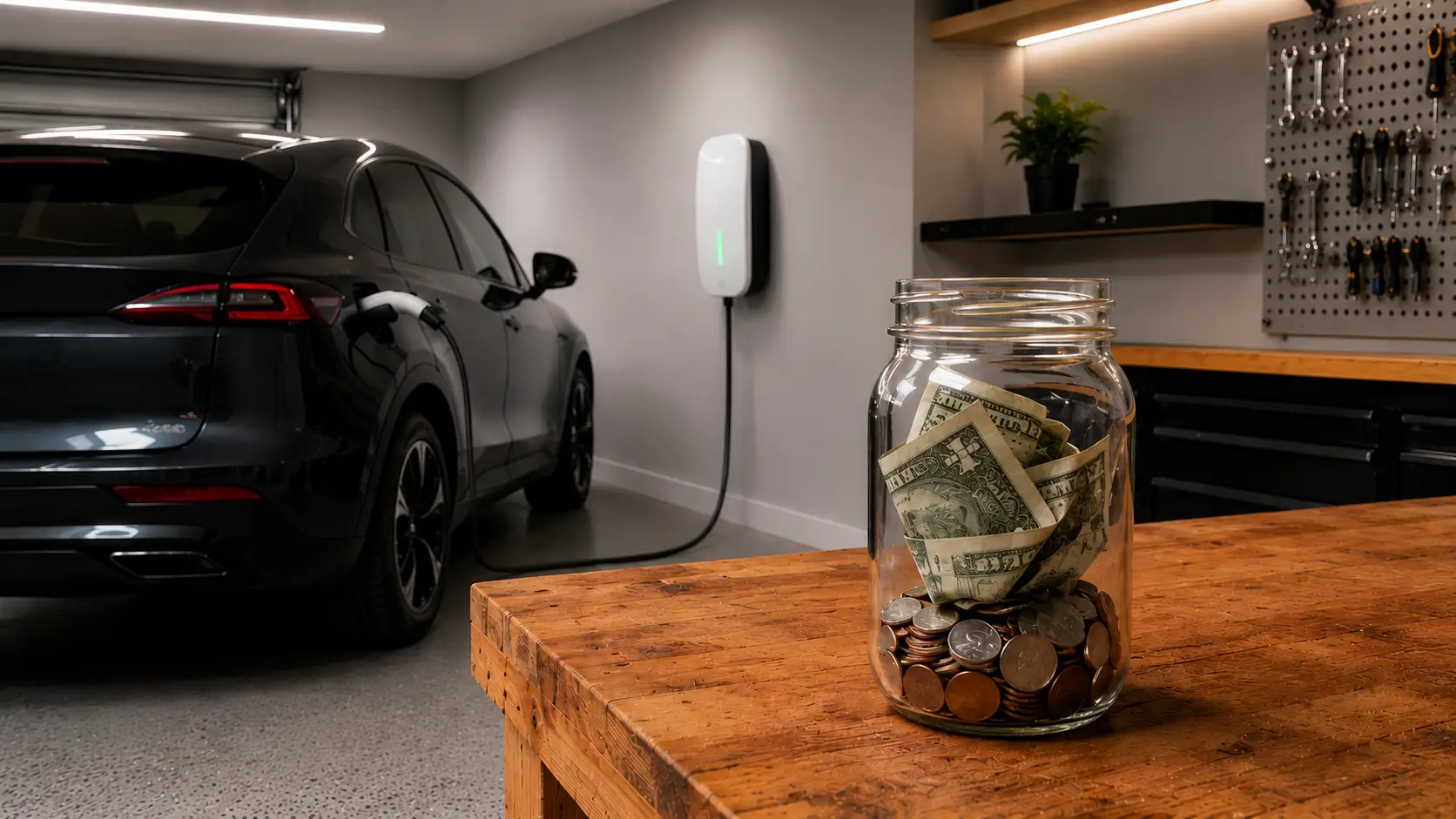
Many utilities offer EV incentives entirely separate from state programs. These are territory-specific — only customers of that utility qualify — and funding resets with annual budget cycles, similar to state rebates. Two forms are most common: a one-time rebate toward a home Level 2 charger, and an EV-specific off-peak electricity rate plan.
Will You Qualify for Any EV Incentive?
Eligibility for EV incentives depends on which program type you're targeting and how you finance the vehicle. Use this checklist as a starting point — then confirm specific rules with the program administrator or dealer before you buy.
- ✓You own or finance the vehicle — the OBBBA loan deduction and most state rebates require ownership, not a lease.
- ✓New, American-assembled vehicle — required for the federal loan interest deduction; ask your dealer for the assembly location before signing.
- ✓Active program in your state — check DSIRE for your ZIP rather than assuming availability.
- ✓Income within program limits — several state rebates pay more (or only apply) below a household income cap; your state's energy office lists the current threshold.
- ✗You're leasing — the leasing company owns the vehicle and may claim separate commercial incentives instead.
- ✗Vehicle acquired after the federal deadline — purchases after September 30, 2025 no longer qualify for the old federal purchase credit.
- ✗Program funding exhausted — many state rebates run on annual budgets and pause mid-cycle. Check before buying.
- ✗No state program where you live — roughly half of US states have no dedicated EV purchase rebate.
Next Steps: Locking In Your Savings
- 1→Get your personalized savings summary Run your numbers in our EV Savings Calculator for a downloadable breakdown of fuel, maintenance, and payback — useful to have on hand when comparing offers.
- 2→Get 2–3 dealer or installer quotes Ask each dealer directly whether they're registered for any state rebate program, and ask your installer about current utility charger rebates — both vary by participant, not just by location.
EV Incentives FAQ
For many buyers, yes — the math just looks different now. The federal purchase credit is gone, but the new loan interest deduction, active state and utility programs, and lower fuel and maintenance costs over time still add up to real savings for plenty of buyers. Whether it pencils out for you depends heavily on your state, your financing, and your driving habits — run your specific numbers with our EV Savings Calculator rather than relying on a general answer.
Yes — the deduction phases out above a modified adjusted gross income threshold and disappears entirely past a higher cap, with separate thresholds for single and joint filers. If your income falls in the phase-out range, you can still claim a partial deduction rather than the full $10,000. Run your specific MAGI against the current thresholds with a tax professional, since the exact cutoffs are set by IRS guidance and can be updated.
Not automatically. This is a federal deduction, and most states haven't separately adopted it for state income tax purposes — meaning your state taxable income may be unaffected even though your federal return benefits. Whether your state conforms is a state-specific legislative decision, so check your state tax authority's current guidance or ask a tax professional before assuming any state-level savings.
Generally yes — most state EV incentives like rebates, sales tax exemptions, utility rebates, and HOV lane access are independent programs that can be combined. Whether they stack with the federal loan deduction depends on your specific financing — verify with a tax professional.
State EV incentive amounts change with each budget cycle, so a fixed dollar figure here would go stale within weeks. Program types and mechanisms stay accurate for years — verify the current amount at DSIRE or with your dealer before buying.
You'll need an annual interest statement from your lender showing the total qualifying interest paid, plus your vehicle's VIN to report on your return. Lenders are required to send this documentation directly, similar to existing mortgage interest reporting — keep it with your other tax records for the year, since you'll need it whether you file yourself or work with a preparer.
You can only deduct interest actually paid while you owned and financed the vehicle — once it's sold or traded in, that loan's interest stops accruing toward the deduction for future years. There's no clawback of deductions already claimed for prior tax years, but a new loan on a replacement vehicle would need to independently meet the same eligibility rules. Confirm the details with a tax professional if you're planning a sale mid-loan.
Free Tools & Guides
Incentive data sourced from IRS.gov and DSIRE. Page last updated May 2026 · State program table checked June 2026.