
Solar Basics: Your Complete Guide to Solar Panels (2026)
These solar basics cover everything you need to know before getting started. Solar panels are one of the best financial decisions a homeowner can make right now — 30% federal tax credit, rising electricity rates, and 30+ year panel lifespans make the math compelling.
Solar Basics: How Do Solar Panels Work?
Solar panels convert sunlight directly into DC electricity using photovoltaic cells. An inverter then converts that to AC power your home uses — and any excess flows back to the grid, crediting your bill through net metering. Your electric meter runs backwards when you produce more than you use, and forward at night. The U.S. Department of Energy provides additional solar basics guidance for homeowners.
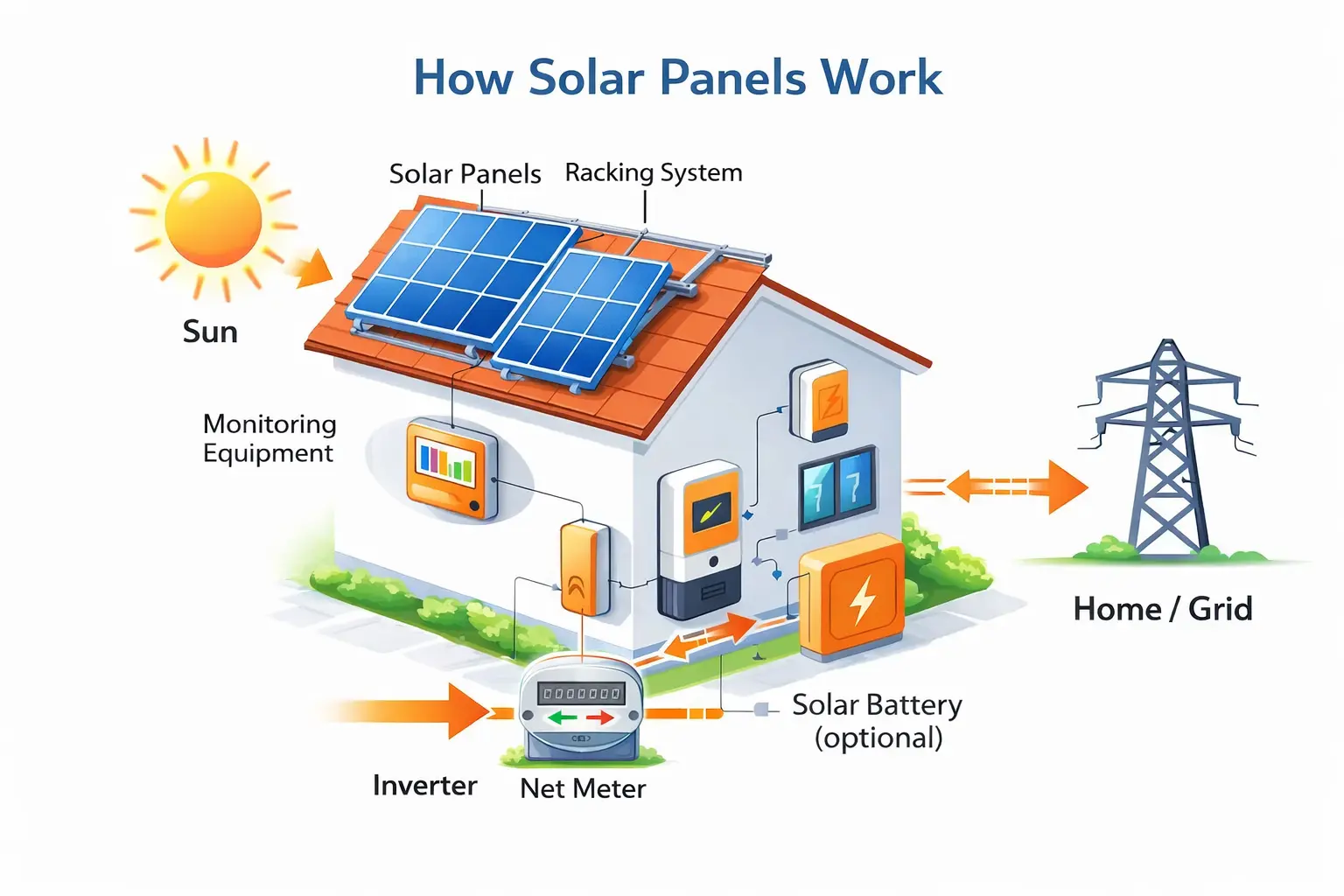
Main Solar System Components
- Solar Panels: Convert sunlight to DC electricity (typically 370-450 watts per panel in 2026)
- Inverter: Converts DC to AC power — string inverter for whole system, or microinverters per panel
- Racking System: Mounts panels securely to your roof with weatherproof flashing
- Net Meter: Bidirectional meter that tracks power you consume and export to grid
- Monitoring System: Shows real-time production data on your phone or computer
Are Solar Panels Worth It in 2026?
Short answer: Yes, for most homeowners. Our Solar Calculator shows exactly how much you'll save based on your location and electricity bill — in under 2 minutes.
Real numbers from typical installations:
- 65-85% lower monthly electricity bills
- Break-even in 7-10 years (often 5-7 years with state incentives)
- 25-30 years of free electricity after payback
- $15,000-$35,000 added home value
- Protection from utility rate increases averaging 3-5% per year
What Affects Your Solar ROI?
Four factors determine how fast solar pays for itself:
- Your electricity rate: Higher rates = faster payback. California (33¢/kWh average) beats Louisiana (10¢/kWh) significantly.
- Sunlight in your area: Arizona gets more peak sun hours than Washington, but both states make economic sense for solar.
- Available roof space: South-facing is optimal. East-west split roofs deliver 85-90% of ideal output with more panels.
- Local incentives: State rebates and utility programs can cut costs by $1,000-$5,000 on top of the federal credit.
Even in lower-sun northern states, solar typically pays for itself within 10 years. Use our Solar Calculator to see your specific numbers.
How Many Solar Panels Do I Need?
A typical American home needs 15-25 solar panels. Here's the math: the average home uses 10,500 kWh per year. Each 400-watt panel produces about 500-600 kWh annually depending on your location. So you'd need roughly 18-21 panels for full coverage.
But your home isn't average. Our Solar Calculator calculates your exact needs based on:
- Your annual kWh usage (from last 12 months of electric bills)
- Usable roof space and orientation
- Your coverage goal — 100% offset, 80%, or partial
- Future energy needs like an EV or heat pump
Planning to get an electric vehicle? Size your solar system 20% larger upfront. A Tesla Model 3 uses 3,000-4,000 kWh annually — that's 6-8 extra panels and a much cheaper addition now than later.
Solar Basics: Tax Credits & Incentives (2026)
The federal Investment Tax Credit (ITC) gives you 30% of your total installation cost back as a tax credit — not a deduction. Dollar for dollar off your tax bill.
- $20,000 system = $6,000 back
- $25,000 system = $7,500 back
- $30,000 system = $9,000 back
The 30% rate is locked in through 2032, then steps down. State and local programs stack on top — adding $500-$5,000 depending on where you live. Search every available program by state in the DSIRE Incentive Database or see our complete Solar Incentives Guide.
Should You Add Battery Storage?
Solar panels alone cover your daytime usage. Add a battery and you cover nighttime, outages, and peak-rate hours too — increasing energy independence from 30-40% to 70-90%.
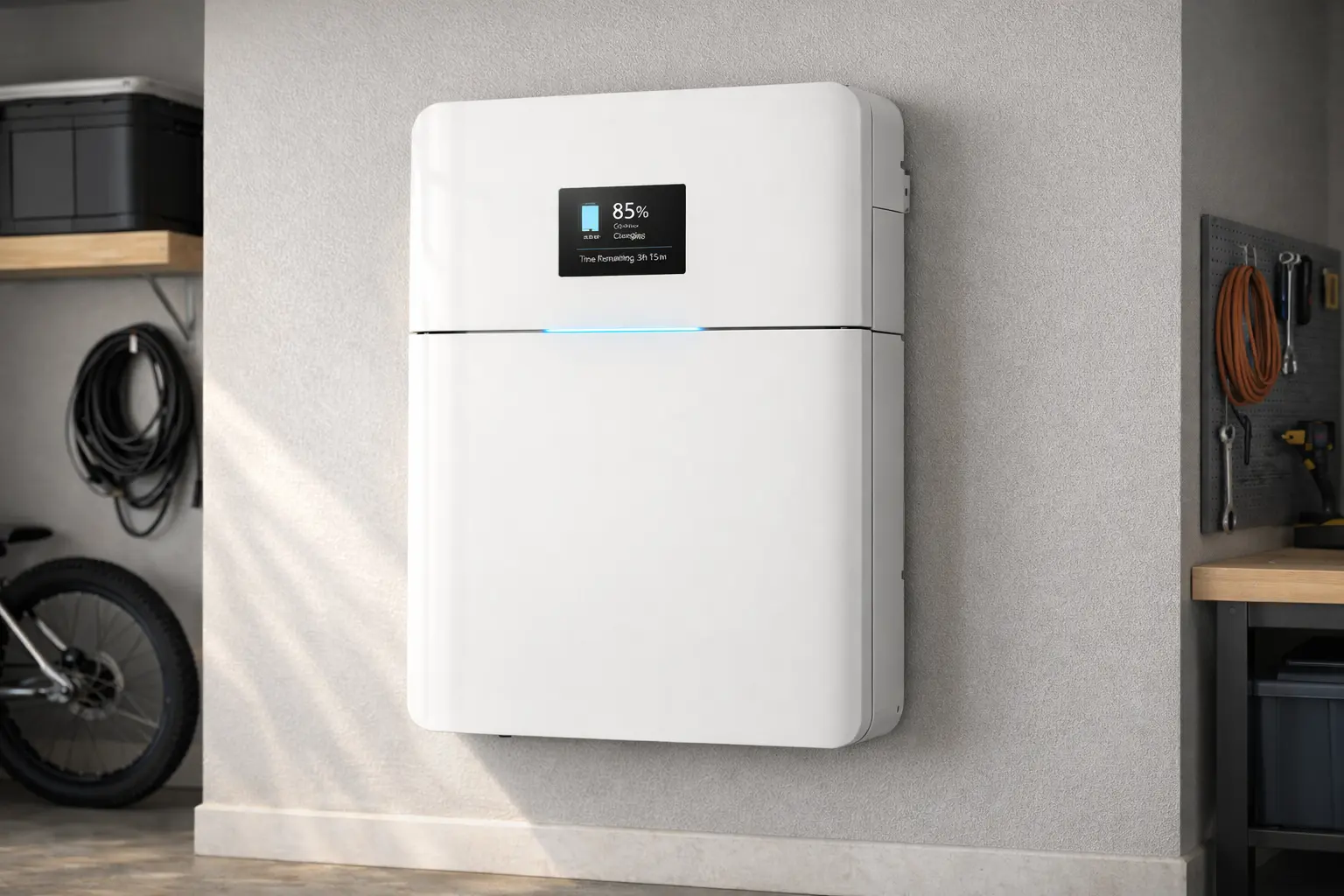
A battery makes strong financial sense if:
- Your utility has time-of-use rates (peak hour pricing)
- You experience frequent power outages
- You want backup power during blackouts
- Your area offers battery rebates (California's SGIP, New York's NY-Sun, etc.)
Current prices: A 13.5 kWh battery (Tesla Powerwall 3) runs $9,500-$11,500 installed, or $6,650-$8,050 after the 30% federal credit. Installing with solar qualifies both systems for the same credit. See full details in our Battery Basics Guide and use the Solar Calculator to find the right size for your home.
How to Get Started: Your 6-Step Action Plan
Going solar is simpler than most homeowners expect. Follow these six steps to go from curious to installed with confidence.
- Calculate your savings: Use our Solar Calculator — 90 seconds, shows 25-year return
- Size your system: Use our Solar Calculator for panel count and battery options
- Get 3-5 quotes: Compare price per watt ($2.40-$3.20/W in 2026), equipment brands, warranties
- Verify credentials: State contractor license, NABCEP certification, liability insurance
- Choose financing: Cash (best ROI), solar loan (0-7% APR), HELOC, or lease/PPA ($0 down)
- Install & activate: 1-3 days of installation, 8-12 weeks to utility interconnection approval
Solar Panel FAQs
Do solar panels work on cloudy days?
Yes. Panels produce 10-25% of normal output on overcast days — they need light, not direct sun. Germany, one of the cloudiest countries in the world, is among the top solar markets globally. Seattle and Portland both support profitable solar installations.
How long do solar panels last?
Premium panels last 30-35 years. Most manufacturers offer 25-year production warranties guaranteeing at least 85% output at year 25. After warranty expiration, panels continue producing at slightly reduced efficiency for another decade or more.
What maintenance do solar panels need?
Almost none. Rain keeps panels clean in most climates. In dusty areas or under trees, spray them with a garden hose once or twice per year. Check your monitoring app monthly to catch any production drops early. No moving parts means nothing to service.
What happens to solar panels during a power outage?
Standard grid-tied systems shut off automatically during outages — required by law to protect utility workers repairing lines. If you want backup power during outages, add a battery system with islanding capability. See our Battery Basics Guide for details.
Do solar panels increase home value?
Yes. Studies consistently show solar adds $15,000-$25,000 to home sale prices. Zillow found that homes with solar sell 4.1% faster and for more money than comparable homes without it. In most states, this value increase is exempt from property tax.
Can I install solar panels myself?
Technically yes, but it's not recommended. DIY installations void equipment warranties, complicate permitting, and you'll miss the 30% federal tax credit without professional installation documentation. Roof work and electrical work carry serious safety risks. The cost savings rarely justify the trade-offs.
How much roof space do I need?
Each solar panel takes up roughly 17-18 square feet. A typical 6 kW system with 15 panels needs about 270 square feet of usable roof space. South-facing sections with minimal shading work best — but east and west-facing sections are viable too, typically producing 85-90% of a south-facing system's output.
Ready to see your solar savings? Use our free calculator — built on these solar basics — to get your personalized estimate. You can also claim your federal credit using IRS Form 5695.
Calculate My Solar Savings →