
Solar Battery Storage: Complete Guide to Home Backup Power (2026)
These battery basics cover everything you need to know. Power outages are increasing. Electricity rates keep rising. A home battery changes both of those problems permanently. Here's everything you need to know about solar battery storage in 2026 — how it works, what it costs, and whether it makes sense for your home.
Battery Basics: What Is Solar Battery Storage?
A solar battery stores excess electricity generated by your panels for use when the sun isn't shining. Instead of sending surplus power back to the grid during the day, you save it in a battery to power your home at night, during peak rate hours, or when the grid goes down.
Think of it as a backup generator that runs on your own clean energy — silent, automatic, and emission-free. Unlike a gas generator, a solar battery requires no fuel, no maintenance, and switches on in milliseconds rather than minutes.
Battery Basics: How Do Solar Batteries Work?
Charging: Storing Your Solar Power
During daylight hours, your solar panels often produce more electricity than your home uses. Instead of sending that surplus to the grid for a small credit, your battery system captures it. Charging happens automatically — the battery management system monitors production and consumption in real time and stores whatever isn't immediately needed.
Discharging: Using Your Stored Power
Once the sun goes down — or when a power outage hits — the battery discharges to power your home. The inverter converts the stored DC electricity back to AC, seamlessly taking over from the grid. The switchover happens in under 0.1 seconds, fast enough that most devices never notice the transition.
Smart Optimization
Modern battery systems use smart software to optimize when to store and when to use power. If your utility has time-of-use rates — charging more during peak hours — your battery software automatically learns to discharge during expensive peak times and recharge when rates are lowest. This alone can save $500-$1,500 per year in California and other TOU markets. Use our Battery Sizing Calculator to see your estimated annual savings.
Battery Basics: Benefits of Home Battery Storage
Backup Power When You Need It Most
The primary reason homeowners install batteries is reliable backup power. When the grid fails, your battery keeps essential systems running automatically:
- Refrigerator and freezer — prevent hundreds of dollars in spoiled food
- Medical equipment — CPAP, oxygen concentrators, refrigerated medications
- Internet and phones — stay connected and informed
- Heating and cooling — maintain safety in extreme temperatures
- Security systems — keep your home protected
- Lights and basic appliances — maintain normal routines
A single 13.5 kWh battery can power these essentials for 10-24 hours. With solar panels recharging your battery each day, you can maintain power indefinitely during extended outages — something no gas generator can match without constant refueling.
Grid outages are increasing dramatically — from 3-4 hours annually per customer in the early 2000s to over 8 hours in 2023 according to utility data. Severe weather, wildfires, aging infrastructure, and grid instability make backup power more valuable than ever before.
True Energy Independence
Solar panels alone make you partially independent from the grid — you generate your own power during the day but still buy from the utility at night. Add a battery and the equation changes completely:
- Generate electricity with solar during the day
- Store excess for nighttime and cloudy day use
- Eliminate or drastically reduce grid dependence
- Protection from utility rate increases (averaging 3-5% per year nationally)
- Self-sufficient during grid outages of any duration
Some homeowners with large solar and battery systems go completely off-grid. Even staying grid-connected, a well-sized solar plus battery system can cut your grid electricity purchases by 80-95%.
Financial Returns Through Rate Arbitrage
In states with time-of-use pricing, electricity can cost 3-4x more during peak hours (typically 4-9 PM) than overnight. A battery charges at the low rate and discharges during the expensive window — the price difference goes straight into your pocket. In California, this strategy can save $800-$1,500 per year on a single battery alone.
Battery Basics: Solar Battery Costs in 2026
Home battery systems have dropped significantly in price over the last five years — and with the 30% federal tax credit, the real out-of-pocket cost is lower than most homeowners expect.
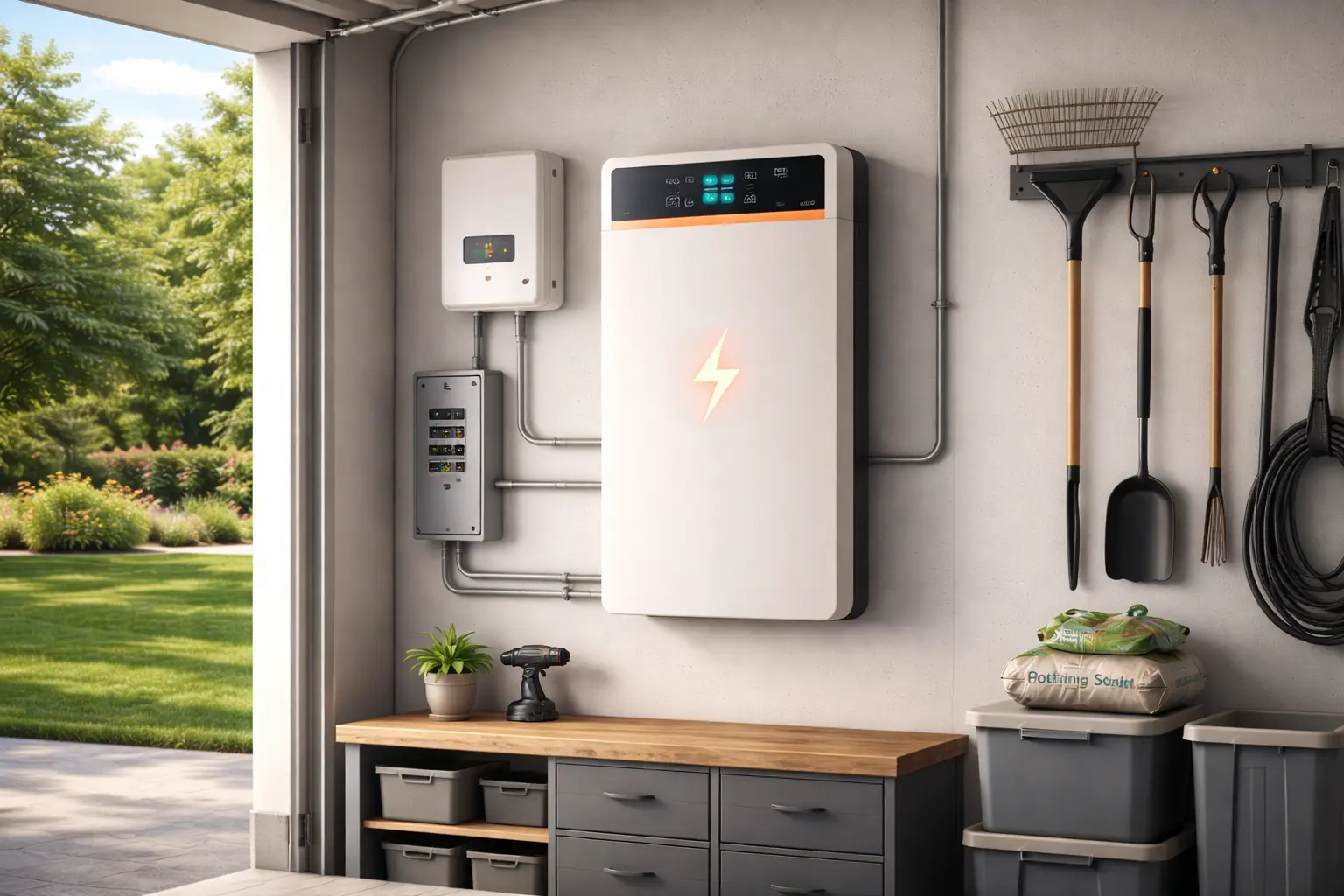
System Prices
Home battery systems range from $8,000 to $15,000+ installed, depending on capacity and brand:
- Tesla Powerwall 3: 13.5 kWh | $9,500-11,500 installed
- Enphase IQ Battery 5P: 5 kWh | $7,000-8,500 installed
- LG RESU 16H Prime: 16 kWh | $11,000-13,000 installed
- Generac PWRcell: 9-18 kWh modular | $10,000-15,000+ installed
The price includes the battery unit, inverter, installation, electrical work, permits, and 10-year warranty. Use our Battery Sizing Calculator to compare specific systems for your home.
After Incentives
The federal 30% solar tax credit also applies to batteries — both when installed with solar and as standalone systems (3 kWh or larger). A $12,000 battery system costs just $8,400 after the federal credit. Add state incentives like California's SGIP ($1,000+ rebate) and the real cost drops further. See all available programs in our Battery Incentives Guide.
Do Batteries Pay for Themselves?
For most homeowners in TOU markets or outage-prone areas: yes, within 7-12 years. After that you're banking savings for the remaining 3-5 years of battery life. In states with strong incentives like California or New York, payback can drop to 5-8 years. The non-financial value — peace of mind, backup power — is harder to quantify but real.
Battery Basics: Lifespan & Maintenance
Most lithium batteries last 10–15 years with 3,000–6,000 charge cycles. For official guidance, see the U.S. Department of Energy battery storage guide. They require virtually no maintenance — monitor performance via your inverter app and keep the unit away from extreme temperatures. Most come with 10-year warranties guaranteeing 70% capacity retention.
Battery Basics: Is Storage Right for Your Home?
Whether a battery makes sense depends on your local grid reliability, electricity rates, and how much energy independence matters to you.
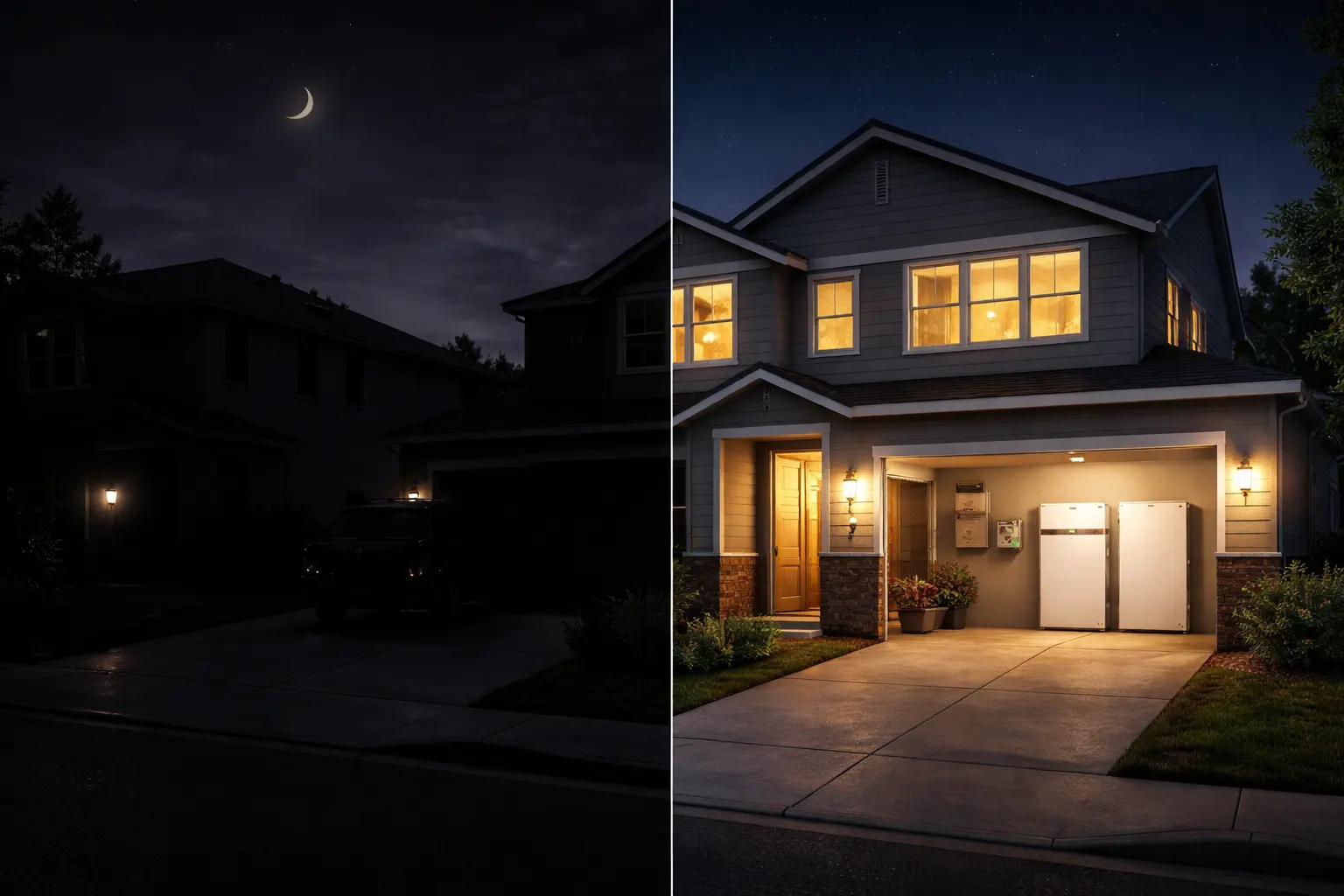
Strong Case For a Battery
- Power goes out more than 2-3 times per year, or outages last several hours
- You live in a wildfire zone, hurricane region, or area with aging grid infrastructure
- Your utility charges significantly more during peak hours (time-of-use rates)
- You already have solar or are adding solar (install together for maximum value)
- Your state offers rebates that significantly reduce the upfront cost
- Someone in your household has medical equipment that requires power
Weaker Case For a Battery
- Power outages are extremely rare and brief in your area
- Your utility uses flat-rate pricing with no peak/off-peak difference
- Your state has no battery incentive programs
- Budget is tight and you need maximum ROI from every dollar
Even in the "weaker case" scenario, many homeowners still choose batteries for peace of mind and energy independence. The decision often comes down to personal values as much as financial return.
Next Steps: Getting Battery Storage
Use our Battery Sizing Calculator to see if battery storage makes financial sense for your home. Then get 2-3 quotes from certified installers — compare price per kWh of usable capacity, warranty terms, and software features. Most installations take 4–8 hours. Use our Battery Sizing Calculator to apply these battery basics to your home.
Battery Basics FAQ
Can I add a battery to my existing solar system?
Yes. Most modern solar systems can add battery storage through a retrofit installation. Your installer will verify compatibility with your existing inverter and potentially recommend an upgrade. Expect slightly higher costs for a retrofit than installing solar and battery together initially.
How many batteries do I need?
Most homes need 1-2 batteries (13-27 kWh total) for essential backup power. Whole-home backup or off-grid setups may require 3-4 batteries. Our Battery Sizing Calculator gives a personalized recommendation based on your daily usage and backup goals.
Will a battery work during a power outage?
Yes — that's the primary benefit. When grid power fails, your battery takes over in under 0.1 seconds. Solar panels recharge it daily, allowing indefinite backup during extended outages.
Do I need solar panels to install a battery?
No — standalone batteries qualify for the 30% federal tax credit even without solar panels, as long as the system is 3 kWh or larger. A grid-connected battery charges during off-peak hours when electricity rates are lowest and discharges during peak hours to cut your bill. That said, pairing a battery with solar maximizes savings and gives you true energy independence.
Ready to find out how much battery storage you need?
Find My Battery Size →